
To take the CE quiz, click here.
This quiz is open until May 2028.

Conflict between feline housemates is among the most common behavior problems reported from caregivers with multiple cats. Unfortunately, tension can be prevalent, yet caregivers often seek help after agonistic behaviors (e.g., hissing, screaming, chasing, fighting) have developed. Veterinary nurses can be instrumental in collecting more information about the relationship between cats by observing the cats’ body language. By making environmental changes and modifying behaviors, tension can decrease and relationships can improve.
Take-Home Points
- The body language of housemate cats in the presence of each other indicates the nature of the relationship as affiliation, tolerance, or tension.
- The 5 pillars of a healthy feline environment are the foundation of preventing and managing tension between cats.
- The separation of cats, through the provision of a sanctuary for the most stressed cat, can instantly reduce tension.
- Positive reinforcement and marker training can be used to cue behaviors that prevent and interrupt negative interactions between housemates.
- During reintroduction, desensitization and counterconditioning can be used to change the cats’ emotions toward one another.
Conflict between cats living in the same home does not typically appear suddenly; most commonly, conflict is a result of growing tension. However, tension is not always noticed by a caregiver as cats may avoid conflict. A cat may look away from the other cat or leave the area to prevent the escalation of tension to aggression. According to a recent survey of feline relationships, 88% of multicat (2 or more cats) households reported signs of intercat tension.1 Caregivers of feline patients in conflict often need help preventing, managing, and reducing tension.
Tension Between Cats
Observing and interpreting feline body language provides insight into cats’ relationships. Affiliative body language includes rubbing and grooming one another, touching when they are sleeping or resting, and playing with one another (FIGURE 1).2 Alternatively, cats can act more like roommates with a sense of neutrality toward one another. These cats do not physically touch but can be in the vicinity of one another without showing signs of tension. The body language of tension involves behaviors of avoidance, inhibition, and repulsion.3,4 A cat avoids conflict by hiding or walking away.4 Often, this body language is so subtle that it goes unnoticed by caregivers. A cat can display inhibition by either not moving or turning and running away from their housemate. A cat can demonstrate repulsion through numerous bodily signs and behaviors such as dilated pupils, flattened ears, crouched body posture, swishing tail, growling, hissing, screaming, chasing, attacking, and biting (FIGURE 2). A cat demonstrates these signs and behaviors to keep the other cat at a distance. Before tension escalates to conflict, a cat may stare, stalk, or chase the other cat. Staring is the most frequent behavior seen with intercat tension.2,4

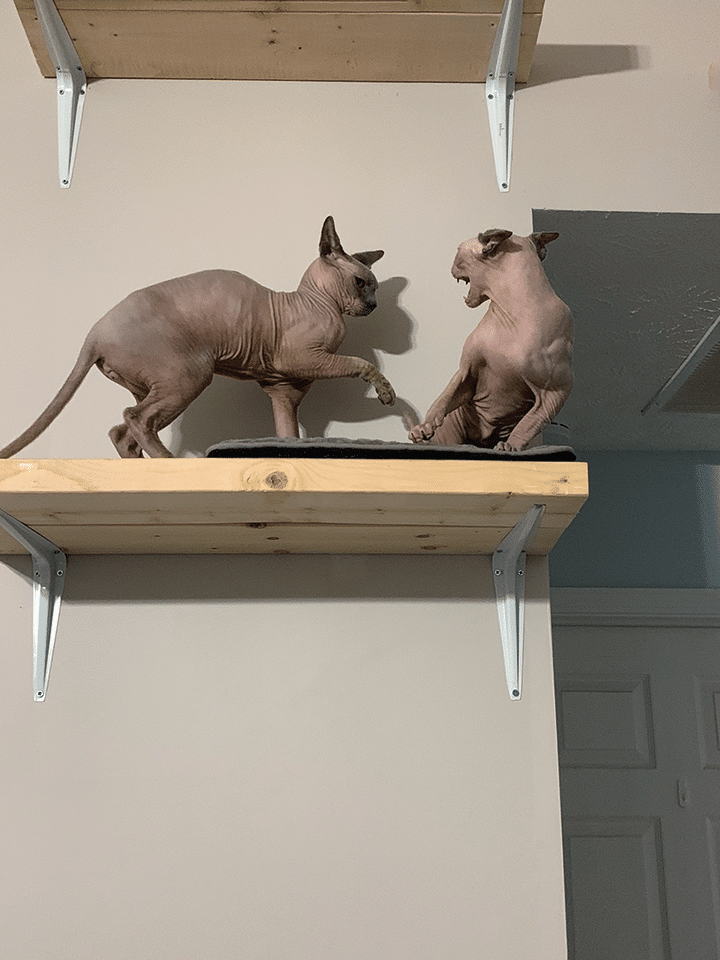
Causes of Tension Between Cats
The first sign of illness in a cat is often a behavior change; thus, ruling out a medical problem or cause for a behavior concern is imperative. A physical examination and laboratory diagnostics should be performed to distinguish a medical concern from a behavior issue. For example, a cat with decreased mobility will develop new routines within the home, potentially choosing a new or different resting spot or litter box than in the past.4 These new routines may disrupt a housemate’s routines (e.g., another cat is sleeping on the newly chosen bed). Also, the stress of not feeling well can alter a cat’s disposition. An unwell cat may be less tolerant and display altered sociability. The avoidance of a housemate may cause a cat to bypass essential daily routines, such as using the litter box or visiting the food and water bowls. Caregivers may first identify inappetence or elimination outside of a litter box as a medical problem.
After medical issues are ruled out, behavior issues and environmental factors should be evaluated as probable causes. Redirected aggression is a behavioral cause for tension, and it can be seen when an indoor cat views an outdoor cat. Becoming aroused and frustrated with not being able to access the outdoor cat, the cat directs its aggression to the closest target, which is commonly a housemate.2,5 An environmental factor that can cause tension to build between housemates over time is competition over resources.6 Tension can also develop when cats are reunited after a period of separation.6 A common example is when cats are reunited after one of the cats visits a veterinarian. The cat reentering the home may smell like a veterinary office, which can make it unrecognizable to its housemate; aggression can ensue upon reintroduction. Tension can also originate from the introduction of a new cat into the home.6 Approximately 73% of households with intercat tension deem the introduction of a new cat to be the cause.4
The 5 Pillars of a Healthy Feline Environment
The 5 pillars of a healthy feline environment, created by the Feline Veterinary Medical Association and International Cat Care, provide a foundation to prevent and manage intercat tension. The pillars are ideally instituted before a new cat is introduced into the home. Nonetheless, the pillars can be incorporated at any point in time to reduce tension.
The 5 pillars are:
- Safe spaces
- Multiple and separated key environmental resources
- Opportunity for play and predatory behavior
- Positive, consistent, and predictable human–cat interactions
- An environment that supports the importance of a cat’s sense of smell
Each pillar plays a role in a cat’s wellbeing and its relationship with another cat, but the first 2 pillars directly affect the likelihood of competition over resources.4,7
1. Safe Spaces
All cats need a safe space, a place where they can rest and feel protected, usually away from other pets in the home.7 This space can be enclosed or open and commonly includes a cardboard box, bed, perch, hammock, and/or shelf. Some cats feel safer when elevated, and a vertical space via a cat tree or shelf can provide a safe space with height (FIGURE 3).
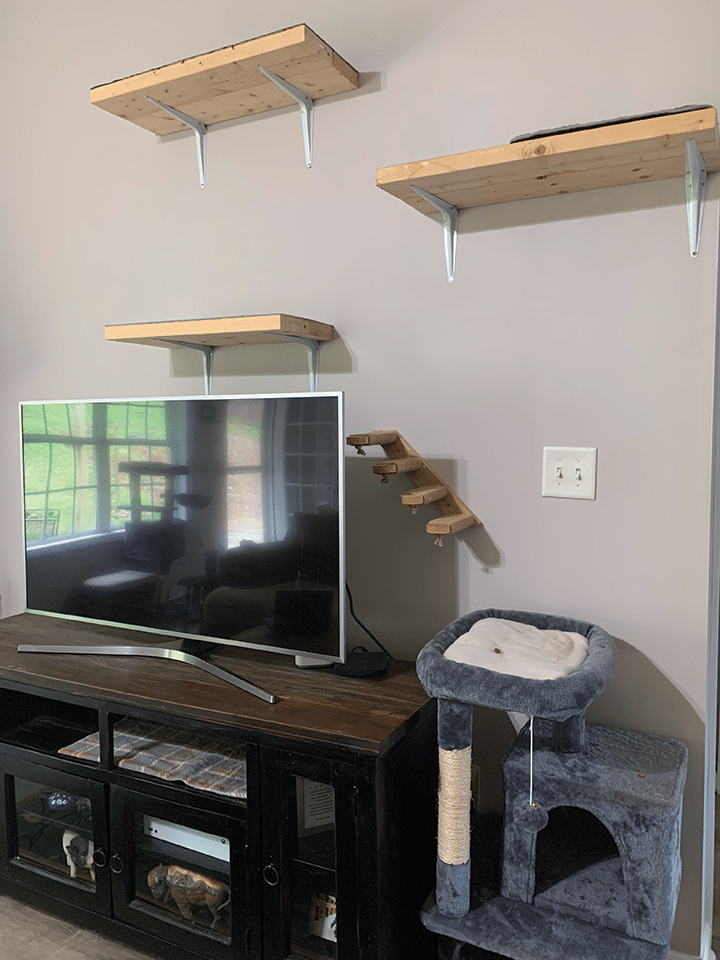
Figure 3. Elevated perches and resting spots (pillar 2 of a healthy feline environment).
2. Multiple and Separated Key Environmental Resources
Key environmental resources for all cats include water, food, litter boxes, scratching areas, and resting places. Each of these resources should be provided in separate locations. Although a common recommendation is that each cat has their own feeding area, the common rule of thumb for litter boxes—number of cats plus 1—can also apply to water, food, and resting places.7,8 Supplying more resources lowers the likelihood that housemate cats will encounter one another or need to wait for a resource, which can be beneficial if tension is present. Tension between cats during meal preparation is commonly unnoticed; the promise of food brings cats together, whereas they would prefer to be apart when food is present. If housemates cannot be separated into different locations for meals, a visual barrier (e.g., wall, kitchen island, furniture, cardboard box) should be placed between food stations to decrease stress.
3. Opportunity for Play and Predatory Behavior
If cats are separated for meals, there is an opportunity for the third pillar—play and predatory behavior—to be incorporated. Cats are solitary hunters and feeders. In the wild, they consume small prey (e.g., rodents, reptiles, birds) as several small meals per day in solitude.9 The natural feline behaviors of hunting and foraging are not simulated by food bowls; thus, scattering kibble around a room or using a food puzzle can provide a closer simulation to their natural behaviors. A plethora of food toys are available commercially, or homemade puzzles can be used to mimic hunting opportunities. Food Puzzles for Cats is an excellent resource for caregivers.10
4. Positive, Consistent, and Predictable Human–Cat Interactions
The fourth pillar—positive, consistent, and predictable human–cat interactions—is important for all cats, including cats that do not have housemates. This kind of human–cat interaction mainly affects tension between cats in 2 ways:
- Another cat in the household can alter the human–cat relationship.4
- The added stress of a negative, inconsistent, and unpredictable relationship with a human affects a cat’s baseline emotional state. If a cat is stressed for any reason, it can more easily develop tension. A positive, consistent, and predictable human–cat relationship that incorporates positive reinforcement training provides the caregiver a tool to manage and decrease stress and tension between cats (CLIENT HANDOUT).
5. An Environment That Supports the Importance of a Cat’s Sense of Smell
A cat’s sense of smell is at least 4 times greater than a human’s sense of smell. Cats use their highly developed olfaction to assess their environment.11 A cat may avoid areas in the home that they would otherwise use or inhabit if they smell another cat, especially one that they find threatening. The smell of another cat can also increase marking behavior within the home through facial rubbing, scratching, or urine spraying. Supplying appropriate scratching surfaces and posts for each cat can help prevent the need for marking. Synthetically derived pheromones (e.g., Feliway) can be diffused to simulate that a cat has already marked an area as their territory.
The Veterinary Nurse’s Role
With any behavior problem in animals, the 3 cornerstones of treatment are management, behavior modification, and medication.12 A veterinary nurse is most helpful for management and behavior modification; they can triage behavior problems, gather information, and introduce behavior management and modification strategies. A veterinary nurse is often the case manager for patients with behavior problems and often the one responsible for communicating with the caregiver and veterinarian (and possibly a qualified animal trainer or veterinary behaviorist).13 This communication increases the likelihood of caregiver compliance and that the behavior modification strategies will be successful.
The veterinary nurse can update the veterinarian on what has been done to manage and modify the behaviors. If the veterinarian feels the behavior issue is beyond their scope or expertise, a veterinary behaviorist can be recommended to the caregiver. This recommendation can not only relieve the veterinary team but also give the caregiver hope that if the treatment plan is not going as expected, there are other treatment options to explore. Through the American College of Veterinary Behaviorists, a caregiver can also search for a veterinary behaviorist near them. Alternatively, many veterinary behaviorists offer virtual care.14
Prevention and Management
Visiting a caregiver’s home, either in-person or through telemedicine, can enable a veterinary nurse to see the cats in their home and develop a feasible plan. To prevent and manage tension between cats, first, the relationships of the cats within the household need to be assessed. Each cat has a unique relationship with each housemate, even if that relationship seems nonexistent. Visualizing the cats and their body language at home and in the presence of each other helps determine which cat needs to be addressed first in the treatment plan.
Cats can be friends and show affiliative behaviors, be roommates and show neutral behaviors, or be antagonists and show agonistic behaviors.6 After discerning which cat is demonstrating agonistic behaviors, the risks for the household can be determined. The risks are determined by the frequency and severity of tension as well as the safety and wellbeing of the cats and caregivers.4 If cats or caregivers are consistently stressed by conflicts throughout the day, or any cat or human is physically injured during these altercations, separating the cats is the best option.
Some caregivers may resist the idea of separating cats or closing them in rooms because many feel guilty. A veterinary nurse can ease a caregiver’s mind by pointing out a cat’s calm or neutral body language and lack of tension when the cats are separated. A veterinary nurse can reiterate that the main goal is to prevent injury and emotional harm to the cats and caregiver. Another goal of separation is to stop the cycle of undesirable behavior.12 When a cat displays aggression toward another cat, the other cat often leaves, sometimes forcibly, and that desired outcome reinforces the agonistic behavior. Ultimately, combativeness can become the default behavior for a cat that is fearful or stressed, bypassing avoidance behaviors and increasing the frequency of aggression toward housemates.
Setting Up a Sanctuary
If there are 2 cats in the home, a sanctuary space should be set up for at least 1 cat. A sanctuary space is dependent upon the household, and it may be a bedroom, basement, finished attic, or any area of the home where a door or gate can be closed to keep a cat separated. The ideal candidate for a sanctuary is the cat that is showing the most agonistic or repelling behavior as that cat may be the most fearful or stressed cat in the household. Giving this cat its own space may easily relieve its stress because it has a safe space (pillar 1), its own resources (pillar 2), and less interaction with the other cat.
Once a sanctuary is established and the cat is comfortable, the option of rotating cats within the home can be considered. The goal of this rotation is to let the cat explore the shared space and to acclimate back into the home without the presence of the other household cat.4 Having a second sanctuary space, or at least an enclosed space in which a cat can spend some hours, is helpful so that one cat has a place to relax while the other cat is free within the home. Occasionally, cats can be rotated in and out of the same sanctuary space; this is a solution for apartments or small houses. If switching cats out of the same sanctuary space, alter the scent profile of the space by using pheromones. A blanket or bed that is frequently used by the cat currently in the space can also be moved with that cat to provide comfort.
Scent Swapping
The next step in managing tension is scent swapping, which is combining each cat’s scent. The personal scent of each cat exists throughout the home, but the concentration level is typically low. If there is intercat tension, a cat may avoid spots where the other cat rubs, plays, or rests. The goal of scent swapping is to create a communal scent of which the cats recognize themselves as part of a social group, ideally increasing their comfortability with one another.
There are several ways to swap scents. One way is to exchange blankets from where the cats sleep. The blanket can be moved into the other cat’s space—not directly onto the other cat’s bed but a couple of feet away from the bed or directly inside the sanctuary space. Another way to swap scents is to intentionally gather scent. Using a soft fabric (e.g., thin blanket, glove, clean sock), pet the first cat over its scent glands around its cheeks, chin, ears, and tail base. Then, let the other cat smell the fabric. If the cat does not hiss or avoid the fabric, pet that cat in the same areas with the same material. Then, return to the first cat with the scent of the second cat on the fabric. Let the first cat smell it; then, if there is no averse body language, pet the first cat with the fabric. This practice can be done daily, alternating which cat is petted with the fabric first. When not being used for scent swapping, the fabric should be kept in a neutral location (i.e., not on a cat’s resting place) or in a sealed bag to maintain freshness and potency.
Behavior Modification
An extensive aspect of managing intercat tension is behavior modification. A veterinary nurse can teach a caregiver several ways to modify behaviors and improve the relationship of housemates. The 2 main objectives are to teach behaviors that can be cued to prevent and/or interrupt undesirable behaviors between cats and to change the way cats feel about each other. To accomplish both objectives, positive reinforcement will be used. Positive reinforcement is the addition of a reward to encourage a desired behavior.15 If a desired behavior is rewarded, a cat is more likely to perform that behavior again. Rewards for cats include social interaction with humans (e.g., petting, playing, verbal praise), food, and toys.16 To strengthen the mental association between a desired behavior and reward, marker training is used. A marker, such as a sound (e.g., from a clicker) or word, can be used to identify a behavior as it is happening, making it clear which behavior is responsible for the reward. A clicker is often used because it gives a clear, short, and distinct sound that is not used for anything else but to mark a behavior (unlike words). The sequence for marker training is as follows: a cat offers the behavior, the behavior is marked as it is happening, and then the cat is given a reward (CLIENT HANDOUT).
There are a handful of behaviors that can be taught to prevent and interrupt tension between cats. Some examples are teaching a cat to respond to their name and other verbal cues such as “target” and “place.” A foundation behavior is teaching a cat to look when their name is called. If a cat can stop and turn its head when called, then an escalation of tension can be prevented in that moment. With the “target” cue, a cat is trained to touch a body part to an object.15 For example, a cat can be trained to touch their nose to a person’s finger or a target stick (e.g., a stick with a ball at the end) as a cue that redirects them away from the other cat. The verbal cue “place” is used to signal a cat to go to a specific place (e.g., mat, blanket, box, cat tree). This cued behavior is helpful to create distance between cats or prevent them from approaching each other. In addition, harness training is another way to deter cats from getting too close to one another, especially when they are freely roaming in the home together.
Reintroduction
Before the reintroduction process can begin, cats should be comfortable with separation and in their sanctuaries, accepting of their scents being swapped, and able to perform behaviors on cue. After these steps have been accomplished, cats should be able to see each other again but with restriction. A glass door, gate, or screen should be placed between the cats to prevent them from accessing each other. In the beginning, a gate or door that is halfway to mostly covered, giving minimal visual access, is ideal.
Desensitization and counterconditioning should be practiced to ensure the best possible outcome for reintroduction. These techniques use repetition to change the way cats feel about each other, to turn tension into neutral, or ideally positive, feelings. The central focus of desensitization is lowering the intensity of response to a feared stimulus.17 Before reintroduction, desensitization should be initiated with scent swapping (i.e., desensitizing each cat to the other’s smell). Counterconditioning can be classical or operant. Reintroduction starts with classical counterconditioning and can transition to operant counterconditioning when the cat becomes less reactive.
Classical counterconditioning involves pairing a feared stimulus (e.g., housemate cat) with something that has a positive association (e.g., food, play). For example, when a cat looks at its housemate, that behavior is marked with a click or word, then followed with food or play. When only 1 caregiver is available, 1 cat can be given food or a treat to occupy them in 1 place. (This also helps the cat form a positive association with the other cat.) Then, the caregiver can switch and work with the other cat while the first cat is given food or a treat. If 2 caregivers are available, 1 caregiver can work with 1 cat, marking every time the cat looks toward its housemate. By repeatedly pairing a treat with seeing the other cat, the way a cat feels about their housemate will change. Eventually, the cat will become more comfortable, and even excited, to see their housemate.
Once a cat is less reactive after classical counterconditioning, operant counterconditioning can be attempted. Operant counterconditioning involves a cat performing a behavior when a feared stimulus is present to earn a reward. For example, after looking at their housemate, a cat may turn their head toward the caregiver for a treat. This behavior is significant because it indicates that a cat feels comfortable enough to turn away from a (previously) feared stimulus and that they have learned to predict a treat. At this point, a caregiver can begin using a clicker to prompt a cat to turn away from their housemate and reinforce the behavior of looking away after seeing their housemate. This further reduces tension and improves comfortability between cats because it rewards not staring at each other.
Reintroduction can take weeks to months, or even a year. If any tension is observed during the reintroduction process, the caregiver should attempt to lower the intensity of the interaction by returning to the previous step.
Medication and Pheromone Use
Medications may be warranted if the tension does not lessen with behavior modification strategies. For some cats, medications may be warranted at the onset of treatment. For example, if the starting point of tension is too high, if it is difficult to prevent the cats from seeing each other in the home, or if there is a lack of compliance with behavior modification strategies, medications may be needed.
The classes of drugs that are commonly used for this behavior issue include selective serotonin reuptake inhibitors (e.g., fluoxetine), azapirones (e.g., buspirone), serotonin–norepinephrine reuptake inhibitors (e.g., venlafaxine), and gabapentinoids (e.g., gabapentin, pregabalin).4 No medication is currently licensed to treat intercat tension; thus, the use of any medication is considered off-label usage. Nutraceuticals are not typically recommended as there are no studies about their efficacy for inducing behavior changes.4 Pheromones (e.g., Feliway sprays and diffusers) may be beneficial but may not be sufficient if agonistic behaviors are already being displayed.
Summary
Tension between cats within the same home is not uncommon and, typically, is not addressed until conflict (e.g., vocalizations, fighting) is noted. The relationships of the cats can be assessed by their body language and behaviors (e.g., affiliative, tolerance, repulsion). Providing the 5 pillars of a healthy feline environment can prevent and decrease tension between cats.7 Reintroducing cats to one another can take weeks to months, or even a year. Not all conflicts can be resolved, and expectations may change with time. Rehoming a cat is an option, yet many caregivers will try numerous modifications and strategies before rehoming. Veterinary nurses are instrumental in reducing intercat tension by directing caregivers on how to prevent and manage tension and implement behavior modification strategies.
References
- Elzerman AL, DePorter TL, Beck A, Collin JF. Conflict and affiliative behavior frequency between cats in multi-cat households: a survey-based study. J Feline Med Surg. 2020;22(8):705-717. doi:10.1177/1098612X19877988
- Mattos De Souza Dantas L. Living with multiple cats. In: Herron ME, Horwitz DF, Siracusa C, editors. Decoding Your Cat. Houghton Mifflin Harcourt; 2020:97.
- Rodan I, Dowgray N, Carney HC, et al. 2022 AAFP/ISFM cat friendly interactions guidelines: approaching and handling techniques. J Feline Med Surg. 2022;24(11)1093-1132. doi:10.1177/1098612X221128760
- Rodan I, Ramos D, Carney H, et al. 2024 AAFP intercat tension guidelines: recognition, prevention and management. J Feline Med Surg. 2024;26(7):1098612X241263465. doi:10.1177/1098612X241263465
- Martin D. Specific behavior modification techniques and practical applications for behavior disorders. In: Shaw JK, Martin D, editors. Canine and Feline Behavior for Veterinary Technicians and Nurses. 2nd ed. Wiley-Blackwell. 2023:283-284.
- Rodan I, Ramos D. Intercat tension: recognition, prevention, and management. Webinar. Accessed April 26, 2024.
- Ellis SLH, Rodan I, Carney HC, et al. AAFP and ISMF feline environmental needs guidelines. J Feline Med Surgery. 2013;15(3):219-230. doi:10.1177/1098612X13477537
- Calder CD. Choosing the right litterbox for your cat. Veterinary Partner/Veterinary Information Network. Published June 14, 2024. Accessed December 2025. https://veterinarypartner.vin.com/default.aspx?pid=19239&catId=102901&Id=12143182
- Sadek T, Hamper B, Horwitz D, Rodan I, Rowe E, Sundahl E. Feline feeding programs: addressing behavioral needs to improve feline health and wellbeing. J Feline Med Surg. 2018;20(11):1049-1055. doi:10.1177/1098612X18791877
- Delgado M, Johnson I. Food puzzles for cats. Updated 2026. Accessed December 2025. http://foodpuzzlesforcats.com/
- Ley JM. Feline communication. In: Rodan I, Heath S, editors. Feline Behavioral Health and Welfare. Elsevier. 2016:27.
- Pankratz K. Treatment of behavior problems in animals. MSD Veterinary Manual. Updated September 2025. Accessed January 2026. https://www.msdvetmanual.com/behavior/behavioral-medicine-introduction/treatment-of-behavior-problems-in-animals
- Martin K, Martin D. The role of the veterinary technician in animal behavior. In: Shaw JK, Martin D, editors. Canine and Feline Behavior for Veterinary Technicians and Nurses. 2nd ed. Wiley-Blackwell. 2023:13.
- American College of Veterinary Behaviorists. Accessed January 2026. https://www.dacvb.org
- Yuschak S. The process of learning and changing behavior. In: Calder CD, Koven P, editors. Dr. Sophia Yin’s Low Stress Handling and Behavior Modification of Dogs and Cats. CattleDog Publishing. 2024:71.
- Positive Reinforcement Training Educational Toolkit. Feline Veterinary Medical Association. Released January 2026. Accessed January 2026. https://catvets.com/wp-content/uploads/2026/01/Positive-Reinforcement-Training-Educational-Toolkit_Complete.pdf
- Price VL. Learning and behavior modification. In: Shaw JK, Martin D, editors. Canine and Feline Behavior for Veterinary Technicians and Nurses. 2nd ed. Wiley-Blackwell. 2023:166.
CE Quiz
This article has been submitted for RACE approval for 1 hour of continuing education credit and will be opened for enrollment upon approval. To receive credit, take the test at vetfolio.com. Free registration is required. Questions and answers online may differ from those below. Tests are valid for 2 years from the date of approval.
1. Positive reinforcement is:
a. Adding a desirable consequence to increase the likelihood of a future behavior
b. Adding a desirable consequence to decrease the likelihood of a future behavior
c. Taking away a desirable consequence to increase the likelihood of a future behavior.
d. Taking away a desirable consequence to decrease the likelihood of a future behavior
2. Which are 2 pillars of a healthy feline environment?
a. Provide a safe space and 1 litter box per cat.
b. Keep cats separated and provide a sanctuary.
c. Provide multiple and separated key resources and respect a cat’s sense of smell.
d. Give opportunities for play and resting spots for cats to sleep near each other.
3. Cats who are friends will:
a. Sniff each other and walk away
b. Groom each other and touch while sleeping
c. Avoid eye contact with each other
d. Hiss at each other
4. The cornerstones of treating behavior problems such as intercat tension are:
a. Prevention and management, behavior modification, and medications
b. Prevention and management, scent swapping, and behavior modification
c. Separation, behavior modification, and supplements
d. Reintroduction, multiple resources, and management of interactions
5. Which is an example of desensitization?
a. Setting up a sanctuary for a cat within a closed space
b. Removing a cat’s safe space to prevent hiding from its housemate
c. Limiting visual access by covering up most of the gate that separates the cats
d. Letting a cat approach a hissing housemate