
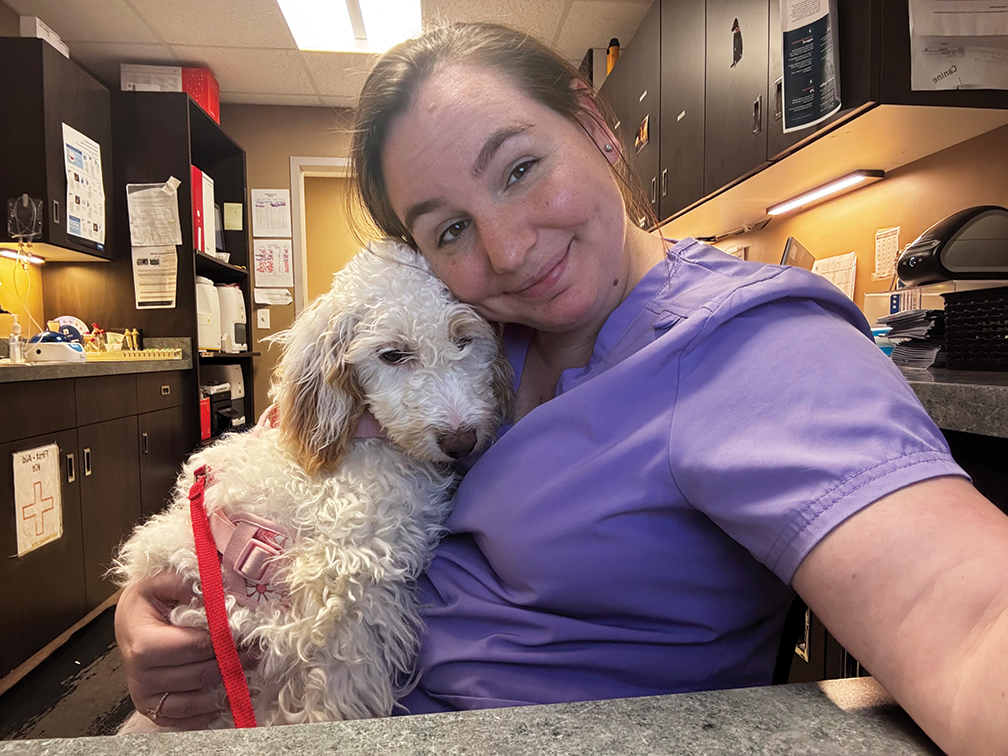
 Starting her career at a busy clinic with little to no organized training and mentorship resources made a mark on Kelsea Burke, LVT. But instead of driving her into resentment or away from the profession altogether, the experience shaped Burke’s professional goals.
Every day, veterinary nurses/technicians make a positive impact on their clients, patients, coworkers, and greater community. But the stories behind each and every one of these professionals are often overlooked due to the selfless nature of working in veterinary medicine. Today’s Veterinary Nurse aims to shine a light on some of these stories with its Clinic Champions series. Each issue, TVN will honor a veterinary nurse for their contributions in community service, scholarship, advocacy, or innovation. This series will highlight unsung heroes who make a lasting impact on their patients and community. At the end of the year, 1 of the 4 honorees will be recognized as the Clinic Champion of the Year. Nominate a Clinic Champion today!
“I’m where I’m at today because of the work that I put in. I basically trained myself, and I definitely felt lonely through that process,” Burke says. “After that experience, I knew I wanted to be somebody in the veterinary field that people can come to for advice. They’re not scared to come to me. They can ask me as many questions as they want. I want to be that person that people look up to and remember throughout their career.”
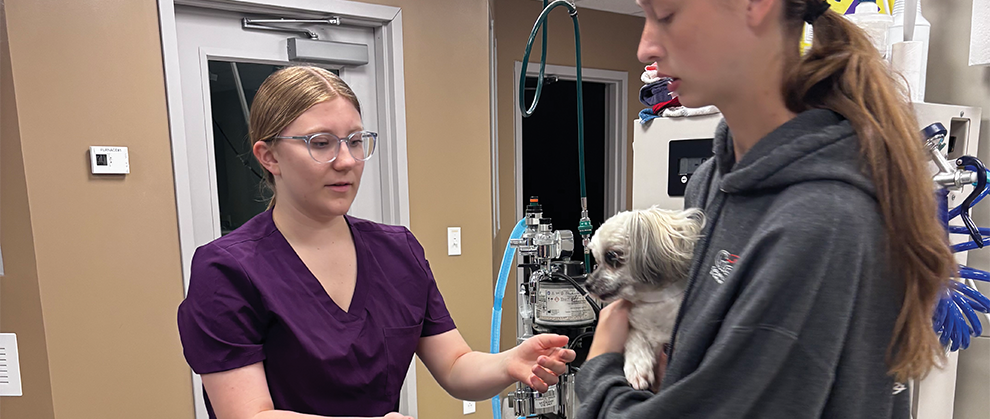
Now, as the LVT supervisor at Watertown Animal Hospital in the North Country of New York, Burke has the opportunity to fulfill that vision every day. She is the lead coordinator for her clinic’s volunteer program, which brings in a range of future veterinary professionals from pre-DVM and LVT students to local high schoolers in the veterinary BOCES (Boards of Cooperative Educational Services) program.
Burke can relate to her student volunteers as someone who knew she wanted to work with animals from a young age. After earning her bachelor’s degree at SUNY Canton, Burke’s goal was to attend veterinary school and pursue a DVM degree. But she opted for a different path after the birth of her first child.
“I stuck with being an LVT, and I realized this is what I like doing,” Burke says. “And now I have 3 kids, I am the LVT supervisor, and I help with inventory management. I feel like I get more hands-on work this way than I would have experienced being a doctor.”
Between supervising 8 full-time employees and leading the volunteer group—which can stretch to 15 people during a rotation—Burke impacts the next generation of veterinary professionals at every step. During her clinic’s volunteer program, high school students learn the importance of veterinary care and the basics, from client communication to obtaining vitals. They get an introduction to hands-on work and the opportunity to see emergency care first-hand. College students in the program play a more hands-on role, from taking diagnostics to scrubbing in and assisting with surgery.
We spoke with Burke about the impact of her clinic’s volunteer program, her journey balancing a career with motherhood, and more.
Today’s Veterinary Nurse: Did you have an opportunity like your volunteer program when you were first interested in veterinary medicine, or were you totally new to the experience?
Kelsea Burke: Definitely new. The only experience I got in high school was through different shelters, because not many vet clinics would take students on unless they were in an actual licensure program. I didn’t get to see actual veterinary work until I was in LVT school getting my bachelor’s degree. That’s one thing I want to offer my student [volunteers] who may not even know what they want to do. I wanted to open up our facility so they had an idea, and teach them that this field isn’t just general practice. It could be emergency medicine; it could be spay-and-neuter clinics. We’re expanding veterinary medicine, and I want to be able to hold these students in this area and keep them coming back. I don’t know if you’re aware, but the North Country has a really hard time holding on to LVTs and veterinarians. My goal is to try to get them to understand that we are all interconnected with one another, and coming back to this area would benefit not only them but the whole veterinary community.
TVN: Are there any moments where things really clicked for someone in the volunteer program and you could see their interest spark?
Burke: About 2 months ago, when I had my last rotation come through, we had an emergency come in. It was a black cat, and of course, it was a new learning experience because they’ve never seen something like this before. Some of our volunteers didn’t realize that cats can get urinary blockages. This one student got to watch us do the entire procedure. She watched us do the recovery, and then she helped me do the oral treatments that night. You could tell from the very beginning of the appointment that he was in pain and he was yelling, and then by the end of the evening when we had drained his bladder and he had pain medications on board, he was purring and he was happy. She was like, “Wow, you saved this cat’s life! That’s amazing. How did you know to tell them to come in immediately?” And I was like, “It’s just experience, and you learn how to distinguish symptoms, and it’s just something that you get to do every day. You get to save lives, and it’s amazing.”
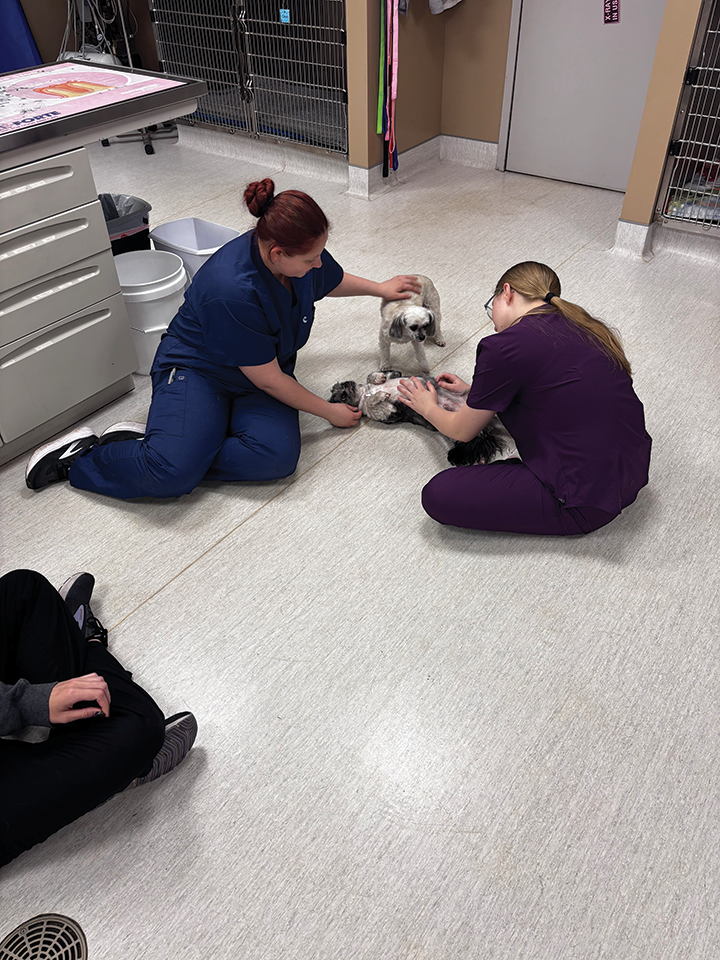
Creating a Pipeline – Two volunteers spend time with patients at Watertown Animal Hospital as part of a program that offers a path into veterinary medicine for students.
TVN: As you moved into a leadership role, what were the areas in which you needed growth?
Burke: Definitely holding others accountable. Mentoring and teaching are wonderful, and that’s one thing. But mistakes happen. We’re people; everyone’s going to make mistakes. It’s about trying to respond in a positive way without making them feel like they’re doing their whole job wrong. Because that’s never the case. Usually, it’s one thing that they have to work on. Trying to mentor them in a way where they know that there’s things they have to work on, but still letting them know that they are wonderful people and they’re wonderful LVTs, but there’s always an area that we can improve. That was a learning curve because I was really bad at addressing mistakes at first.
TVN: You mentioned that you have 3 children and that has influenced some of your career decisions. What was it like navigating the experience of becoming a parent?
Burke: Honestly, one of the reasons that I made a change and moved my career elsewhere is because I was on call at my initial clinic and I had 2 children. During my on-call weekends, I would work 50 to 55 hours from Friday to Sunday, and I loved it. I loved the emergency work and helping all these patients, but I was not getting that work–life balance that I really needed, especially having young kids at home. The clinic I’m at now, we don’t do on-call shifts. We see emergencies and urgents while we’re open, but after we’re closed, we refer our emergencies to an emergency clinic about an hour away. It is really unfortunate that we have to do that. But we also have to consider the wellbeing of our workers because if we’re exhausted and we’re having mental health issues because of the amount that we work, then we’re not giving the best care that we can for our patients. That was definitely something that I needed to learn how to balance, and I’ve gotten better with not being on call. There are days when I stay here later than I should. But my kids are older now, and they’ve been to the clinic. They’ve seen me work and talk to the staff, and they understand that my job is really important. They’re always going to be No. 1, but mommy’s job is to take care of patients too. We’ve gotten to the point where I think I’m at a good balancing act between my work and home life.
TVN: Were you able to seek out help from other parents during that transition? How were you able to find support?
Burke: Veterinary medicine has so many different hotlines and different ways that you can reach out for help. Unfortunately, at my previous clinic, I was one of the only mothers there. It was really hard for anyone to understand why I couldn’t stay 2 hours past my shift, or why on-call weekends were hard for me. I had to reach out through different routes to talk to other people through online veterinary communities. That’s what made me move clinics, because the people I spoke to said, “If your clinic doesn’t understand that you have another life outside of work, then maybe it’s time to make a change. It could be the right or wrong decision, but you’re never going to know unless you do it.” It was the best advice, because I am so happy. I love my career. I love what I do. I love being able to teach and mentor all these different students where I couldn’t before, and I especially love training these new LVTs. I like being the person they can look up to.