

Gastrointestinal (GI) problems are among the most common reasons clients bring their pet to the veterinary hospital. Yet the GI tract is known for its resiliency; acute vomiting and/or diarrhea often resolve the problem uneventfully, sometimes without any supportive care. Collecting a thorough history enables the veterinary nurse to categorize clinical signs, which can be useful for making dietary recommendations. Effective communication by veterinary nurses can be key for helping clients improve outcomes for patients with GI signs.
Take-Home Points
- Therapeutic gastrointestinal diets are an effective first-line treatment for many patients with gastrointestinal signs.
- Gathering a thorough history can help veterinary nurses triage clinical signs and recommend ideal first-line nutritional therapy.
- Although food should be withheld for patients with some conditions, feeding should resume as soon as it is safe for the patient to eat.
- Good communication skills can help veterinary nurses effectively collect information and create therapeutic plans.
Gastrointestinal (GI) problems are among the most common reasons clients bring their pet to the veterinary hospital; however, the causes of the typical GI clinical signs of inappetence, vomiting, and diarrhea are varied. On any given day, a veterinary nurse may talk to different clients about feeding their pets that have similar signs but different diagnoses and therapy plans. A good understanding of the science behind feeding patients with GI conditions can help veterinary nurses promote better understanding, compliance, and health outcomes for clients and their pet. A veterinary nurse can improve patient outcomes by obtaining a complete patient history, initiating appropriate nutritional therapy, and communicating effectively with clients.
This article provides examples of how core communication skills can help with effective information gathering, allowing for categorizing or triaging symptoms to support nutritional recommendations and improved client compliance and health outcomes.
Take a Thorough Dietary History
A key skill for veterinary nurses is the ability to collect a thorough patient history. This can provide clues while triaging GI clinical signs, a part of clinical standard operating procedures, to determine the potential area of disease origin based on patient symptoms (FIGURE 1).1 Taking a patient history should include diet (all food) and timing and method of feeding. Understanding the patient’s nutritional history can help the veterinary team create a specific and appropriate dietary recommendation.3
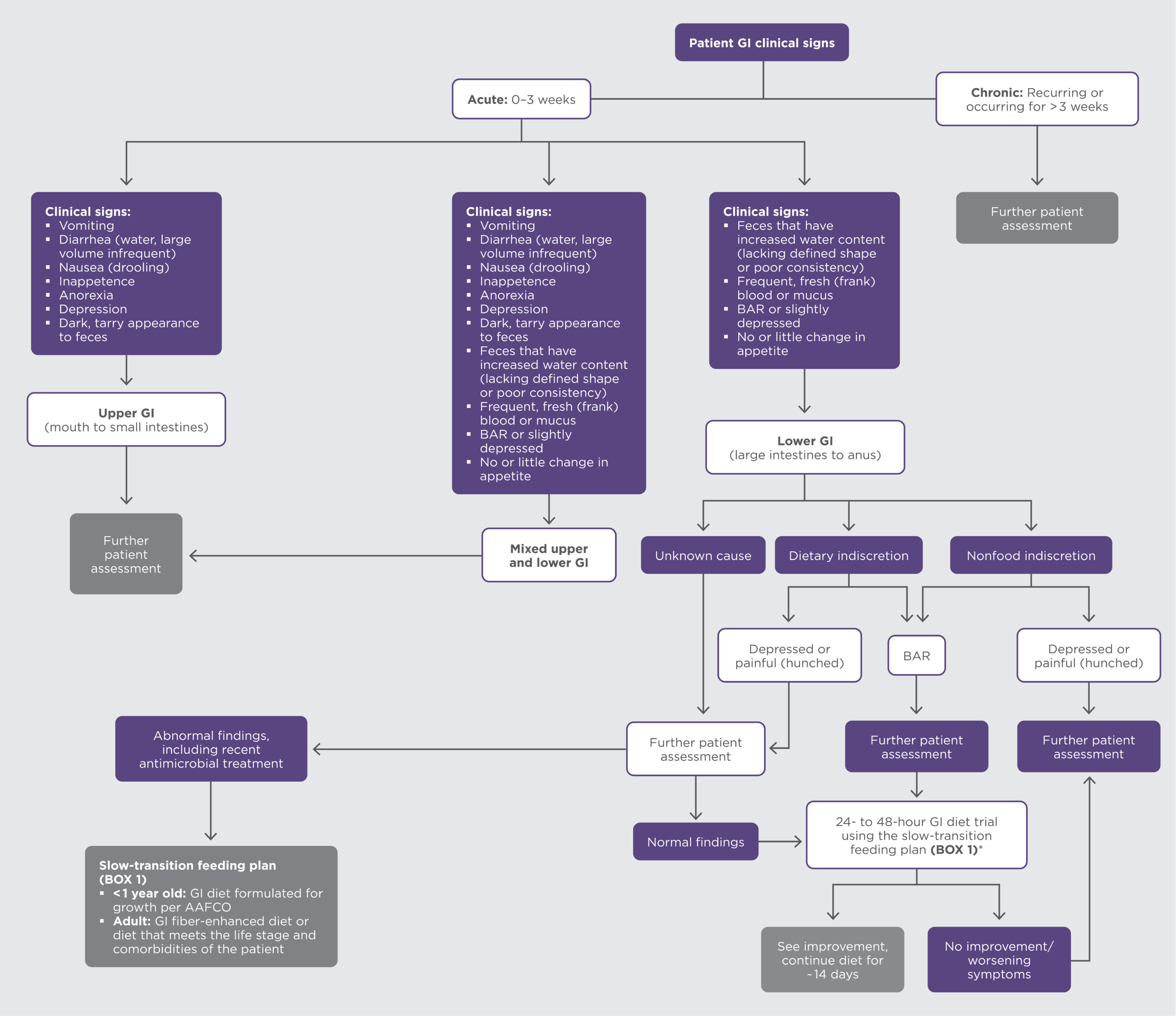
Figure 1. Standard operating procedure flowchart for triaging patients with GI signs.
BAR = bright, alert, responsive; GI = gastrointestinal.
*Patients with simple gut dysbiosis generally see improvements in symptoms (less frequent bowel movements) and fecal quality (thickening stool) within 24–48 hours of a diet transition. Clients should contact the clinic if symptoms do not improve or worsen.
Simplify Complex Issues
The digestive system is complex and intertwined with the entire body. When discussing clinical signs, health conditions, or therapy plans with clients, use familiar words and phrases to enhance conversations. A simple way to explain GI function is to say that the GI tract digests and absorbs nutrients and helps remove waste. It is divided into upper and lower sections. The lower GI tract absorbs water and stores feces and also houses microbes that ferment undigestible food or nutrients. The byproducts of microbial fermentation, called metabolites, have local and systemic influence via the gut axis, the connection between the gut with multiple organ systems in the body through the microbial activity and metabolites they produce. For example, in the gut–brain axis, microbes can influence neurologic functions, and the central and enteric nervous systems can influence the state of the gut microbiome.4
Listen to the Client
Before thinking about what to say to clients, first listen to understand them. Without understanding the reason(s) for a client’s question or statement, our responses may not be as effective as we hope, or they may lead to misunderstanding and defensiveness. You may need to start the conversation by asking questions.
- Ask open-ended questions. Using open-ended questions helps gain detailed information to triage the patient’s symptoms.5 Closed-ended questions, for which the answer is a single word (e.g., yes or no), provide limited information.
- Listen to the answers. Listen, without taking notes or interrupting, while the client talks. One study found that, on average, veterinarians interrupt a client after only 15 seconds.6 Also, be sure that your body language indicates that you are open to listening by making eye contact, leaning in, relaxing your arms, and maintaining a soft facial expression.
- Offer empathy. Acknowledge the client’s emotions, which can help build trust. Recognize the client’s emotion and identify the reason for it.
- Summarize what you heard. Paraphrase what you heard the client say and ask any clarifying questions.
Communication Scenario
The following scenario suggests some effective communication techniques for talking with a client whose dog, Fluffy, has apparently exhibited GI signs.
First, the client phones the veterinary office.
The client: “I need antibiotics for my dog Fluffy, who has an upset stomach.”
Proceed with a clarifying line of questioning.
- What have you noticed about when Fluffy started showing signs that made you determine her stomach is upset?
- What have you observed since Fluffy’s upset stomach started?
- How would you describe the differences in Fluffy specifically from before these symptoms started until now?
- What has a day with Fluffy been like since the symptoms started?
Your possible responses, based on the client’s answers:
- That sounds really tiring because you had to get up every hour all night.
- This sounds like a stressful situation because your last pet had chronic pancreatitis.
- You are very worried because Fluffy eats toys and you wonder if there is a blockage that could need surgery.
Your possible summary questions/responses:
- What I’m hearing is [_______]. Is there anything else?
- From what you are telling me, [_______]. What else?
- To summarize what I am hearing, [_______]. Can you tell me more about [_______]?
You determine that Fluffy has acute-onset diarrhea and encourage the client to bring Fluffy in for a thorough examination, which indicates that the diarrhea is probably large-bowel focused (FIGURE 1). The veterinarian then asks you to discuss a GI diet with the client. Conversations with clients about nutrition for their pet with a GI condition have both internal considerations (what we need to know as background scientific information) and external expression (how we effectively communicate that information to the client).
The client: “Antibiotics worked for my previous pets with the same symptoms: soft poop and frequent bowel movements after getting into some cheese. Why can’t I have an antibiotic prescription for Fluffy?”
Your internal considerations: Acute dysbiosis, an imbalance in the gut microbiome, resulting from an abrupt diet change, can lead to GI symptoms such as increased fecal moisture and bowel movement frequency, potentially with mucus or frank blood.7,8 During and after administration of antibiotics, opportunistic bacteria can out-compete beneficial bacteria for food and space to create a new dysbiosis with recurring symptoms or potentially a new chronic condition.9
Your external expression:
“I hear that you would like to give Fluffy antibiotics because your previous pet had similar symptoms and you feel the antibiotics stopped the diarrhea. I’m happy to hear that we both have the same goal: We want Fluffy to feel better and the symptoms to stop. Tell me what you know about the gut microbiome. [Listen, paraphrase back what you heard.]
“I am hearing that you have some understanding of how important the gut microbiome is and how it relates to health. Research has shown remarkable success with using a therapeutic diet to stop symptoms by supporting the gut microbiome. We’ve also seen this here in the hospital. I expect that after feeding Fluffy a therapeutic diet, Fluffy’s stool will start to thicken, the number of times she has to go to the bathroom will decrease within 24 hours, and her symptoms will be gone within 3 to 7 days. What are your thoughts?”
The client: “I have heard that you can feed a bland homemade diet like turkey and pumpkin or chicken and rice. Can’t I just feed that rather than the therapeutic diet?”
Your internal considerations: Historically, a bland diet of chicken and rice, with or without pumpkin, has been a homemade diet recommendation for a short period of time, as this diet is not complete and balanced.10 There are a few risks associated with the recommendation of a homemade diet: 1) The recipe is not followed correctly (e.g., the client uses chicken thighs, pork, or brown rice) and 2) the pet may pick out certain ingredients, rendering the recipe unbalanced. Comparing feeding volumes to a commercial fiber-enhanced therapeutic GI diet, the latter is formulated to be complete and balanced, including digestible proteins, potentially hydrolyzed, and fiber blends to benefit GI disorders.11
Your external expression:
“Tell me about your experience with cooking for Fluffy. [Learn their comfort level or knowledge about homemade diets before making a judgment. Remember to paraphrase back what you have heard.]
“We have had the most success at stopping symptoms when the patient, who has symptoms like Fluffy’s, starts with the therapeutic GI diet enhanced with a special fiber blend. We have a great handout that looks at the differences between a homemade bland diet and a diet made for GI upset. I can share it with you if you are open to that. For now, I would be happy to complete a personalized energy calculation and feeding plan to help restart Fluffy’s digestive system. What are your thoughts?”
The client: “Fluffy is fussy, and I’m worried she won’t eat another diet. What should I do if she doesn’t eat?”
Your internal considerations: All potential reasons for hyporexia should be considered (e.g., a particular palate for smell, taste, or texture; medical components such as cachexia, nausea, abdominal pain, oral pain, or dysphagia). Corrective measures should be included in the therapy plan (e.g., antiemetics, cobalamin or vitamin B complex supplementation, appetite stimulants).12
Your external expression:
“I’m hearing that you are concerned about changing Fluffy’s diet. Tell me about all the food Fluffy eats now.” [Listen, paraphrase back the summary list, and ask, “Anything else?”]
Based on what you have told me about Fluffy’s diet, I recommend that we work on transitioning to a therapeutic GI diet. Fortunately, we have options to consider that I think might fit Fluffy’s palate based on what you have told me. I would like us to look at the options and create a specialized feeding plan for Fluffy. What are your thoughts about that?”
The client: “I’ve heard that you should rest a pet’s gut when they have GI symptoms. How long should I wait to feed Fluffy?”
Your internal considerations: A good rule of thumb is to reintroduce food as soon as it is safe to do so. The gut was created to digest and absorb food, and without food the villi in the jejunum lose the ability to absorb nutrients by 50% after only 24 hours.13 Even for patients with severe disease with vomiting (e.g., parvovirus enteritis), signs resolve faster when feeding is initiated.14 The veterinary team can ensure that the diet is appropriate and advise how much should be provided (BOX 1). Feeding small amounts of food in multiple meals ensures that the upper GI tract and microbes are not overwhelmed with large amounts of food. Hence, it is recommended to feed the gut while still controlling the degree of digestive changes. However, patients should not be fed if they are not sternal, have difficulty swallowing, have uncontrolled vomiting with a risk for aspiration, or have potential for intestinal blockage.13
Your external expression:
“The veterinarian has determined Fluffy’s health to be ready for her to take in appropriate nutrition. The goal is to feed a digestible diet in small, frequent amounts, increasing the amounts over 3 to 5 days. Let me give you a feeding guide with my diet recommendation for Fluffy over the next 2 weeks. What do you want to be sure is in the feeding guide?”
- 0.8–1: Overweight or obese
- 1.1–1.6: Low to moderate energy
- 1.7–1.9: Moderate to high energy or intact
- 2–3+: Growth, gestation, lactation, cachexia, or high energy needs
- Day 1: 50% DER in 6 meals
- Day 2: 60% DER in 6 meals
- Day 3: 70% DER in 6 meals
- Day 4: 80% DER in 6 meals
- Day 5: 90% DER in 6 meals
- Day 6: DER in 6 meals
- Day 7: DER in 4 meals
- Day 8–10: DER in 3–4 meals
Summary
Veterinary nurses are key players in gathering a relevant patient history and discussing clinical signs and nutritional interventions with clients. Listening to clients and using knowledge to express the reasons for the recommendation builds trust with clients. Good communication skills can help veterinary nurses meet the health goals of patients and clients.
- Create a standard operating procedure with your veterinary team for triaging patients with gastrointestinal signs.
- Develop 3 open-ended questions that can be asked to collect a patient’s history.
- Practice core communication skills (e.g., open-ended questions, active listening with paraphrases, empathy statement) with at least 3 clients each day.